


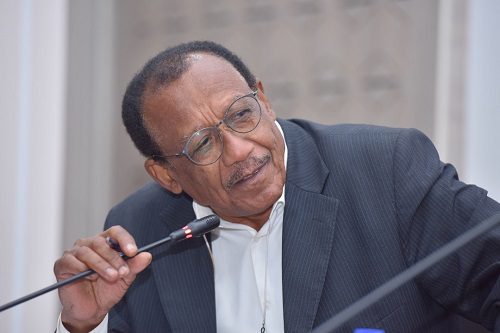
Jamal Muhammad Ibrahim
(1)
A few years ago, people wrestled the Kofid-19 pandemic, which stormed humans and then fought, not only doctors, but also politicians. They exchanged charges and stunted about the people who fired the pandemic.
As soon as the Sudanese came up with the story of the drivers and rockets, which were detained by the California Police to enter into Iranian weapons deals purchased for the Sudan, they were caught with a blatant attack on Khartoum airport, the first flight of a Sudanese aircraft coming from Cairo. The complexity was compounded by external fingers related to the Iranian deal on the one hand, and then another complication related to the accusation of Khartoum to Ethiopia, the eastern neighbour of the Sudan, by targeting Khartoum airport with motor vehicles from its territory.
(2)
The dust about the capture of the samurai, which was involved in the Iranian arms deal for the Sudan, would not have taken an unfounded dimension of the incident if it had not occurred during the outbreak of the American war against Iran.
(3)
The Sudanese Minister may have had evidence of Ethiopia ' s accusation, but the reaction was urgent and exceeded the diplomatic prudence that would have enabled him to take account of the historically extended domestic relations and dialogue between the two countries, although in previous times such relations had not reached the level of the withdrawal of ambassadors and the declaration of deterrence in the same sense.
It's a war that got caught inside, and soon it was out with hands, fingers, cars, missiles and ammunition.
The action of the Minister for Foreign Affairs, mandated by his severe statements, has not left an opportunity for diplomatic methods and options, such as the handling of matters with some wisdom and inclusion in treatment, and even if the Sudan ' s membership remains suspended in the African Union, this will not prevent the authority in the Sudan from raising its complaint to the Union, if the opportunities for direct dialogue with a neighbouring country were exhausted after the stabilization of the Sudan.
Westerly, the Minister for Foreign Affairs of the Sudan, the author of that fire statement, had already represented his country as Ambassador to Ethiopia, and given his personal ties with the people of power in Ethiopia, during his occupancy as Ambassador in Addis Ababa, he, a professional diplomat, could personally take the initiative to contain the crisis before it escalates and could not solve it.
(4)
It is clear, for every follow-up to the developments of the Sudanese war, that their complications are increasing every day, as fighting against the most, rising an hour later, and that death and hunger are haunting the people of the country before the disease.
Hunger grinds are people who wait for the unbearable dignity of their own, who, by their sins, fierce and misguided children at the age of six or seven, are free to pray, are lucky men.