


Sudan Media Forum: Kampala, June 26, 2025 (Sudanile) – As Sudan endures one of its most devastating wars, a diverse group of more than 47 thinkers, academics, politicians, and youth from across the nation’s regions has gathered in Kampala, Uganda. They convened for an intellectual forum aimed at forging a collective vision to end the war and lay the foundations for a new civil state, one free from authoritarianism, marginalization, and militarization.

Hosted by the “Democratic Thought Project” and the “Solidarity Movement for Democracy and Social Justice,” the three-day forum ran from June 15-17. Participants engaged with 25 academic papers on the core issues of the civil state, the proliferation of militias, and transitional justice, concluding with a central vision: that only a broad, unified civil front can generate the pressure needed to end the war.
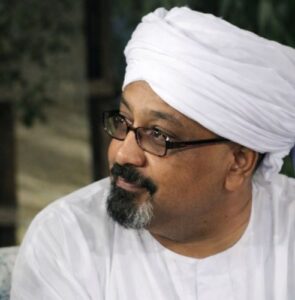
Speaking to Sudanile, forum organizer Shams al-Din Daw al-Bait said this front must include civil society, groups from the country’s periphery, and political and productive forces to compel the warring parties to lay down their arms.
Probing the roots of the crisis
In his opening remarks, Daw al-Bait called for a serious examination of the “pimples and boils” that have scarred the face of Sudan since its independence. He argued that the country’s political conflict has been trapped in a vicious cycle defined by three competing currents: the aspiration for democracy, the cry for justice from the marginalized periphery, and the push for a religious state. Since 1958, the military has acted as the decisive, disruptive element in this cycle.
The failure to forge a viable formula for democratic coexistence among these competing visions, he contended, lies at the core of the crisis. He stressed that the war will only be stopped by the will of the Sudanese people themselves.
Debating the state, constitution, and citizenship
The first session on the state and constitution saw Dr. Mohamed al-Amin Ismail champion a federal system as the solution to a crisis rooted in the absence of a foundational constitution. This was countered by Dr. Suad Mustafa, who criticized the Sudanese elite’s preoccupation with regime security over the security of the state and its people. Sidgi Kaballo concluded the session by analyzing the post-colonial state’s failure to achieve balanced development, noting that the authoritarian coups of 1969 and 1989 only deepened this failure.
A later session explored the tensions between a civil and religious state. Madiha Abdullah contended that the debate over a “civil state” in Sudan has remained purely theoretical. Mohammed Jamil Ahmed sparked a wide-ranging discussion with his paper on the “Fallacies in the State Narrative of Islamist Discourse,” while Dr. Asma Ahmed al-Naim lamented the absence of a social contract, urging the creation of new ways to connect with grassroots communities to build solutions from the bottom up.
Justice, marginalization, and a culture of militarism
Discussions on justice were led by Zuhair Bashar, who outlined key questions for any transitional justice process: Where does it begin, who are the partners, and how is it implemented? He noted that past efforts have always been imposed from the top down. Activist Niemat Koko insisted that a civil state is meaningless unless paired with pluralistic democracy and gender justice.
The forum dedicated its second day to deconstructing Sudan’s culture of militarism and the “militia-ization” of its society. Suliman Baldo traced the history of militias from colonial tools to their post-1989 transformation into a core part of the Islamist movement’s political project. Fadili Jamma decried the nation’s endemic coup culture, noting that 36 attempts since independence have turned power into an end in itself.
Hanadi al-Mak’s field study from Blue Nile State illustrated how militarization has deepened gender-based marginalization, while Fath al-Alim Abdel-Hay argued that tribal militias have evolved from local defence units into instruments of political pressure.
In a session on social recovery, Howida Atabani proposed tackling hate speech through “counter-learning,” while researcher al-Mahboub Abdelsalam called for “a supra-human practice” of forgiveness to create a uniquely Sudanese model of transitional justice.

A Sudanese-led path forward
The final sessions addressed the media’s failure to reflect the country’s diversity and the legal frameworks required for justice.
In a concluding interview with Sudanile, Daw al-Bait emphasized the forum’s key takeaways. He stressed that addressing marginalization cannot be a top-down process but requires recognizing the marginalized as essential partners in building a new state. He called for dismantling the militia structures in favour of a single, professional, national army with a democratic creed, fully removed from politics and economic interests.

He noted with pride that the forum included open dialogue with participants from Islamist currents, focused on finding a path toward a state based on equal citizenship, not faith.
“This meeting is a model for the possibility of Sudanese unity, even in the harshest circumstances,” he concluded. He affirmed the imperative for the Sudanese people to reclaim their right to self-determination, free from foreign interventions that perpetuate the war, and announced plans for a large-scale youth forum to continue the dialogue.
The forum’s diverse list of participants included Dr. Suliman Baldo, Sidgi Kaballo, al-Shafie Khidir, Ambassador Nureldin Satti, Faisal Mohamed Salih, and dozens of other prominent academics, activists, and former officials.
This report was prepared by the “Sudanile” and is distributed by the Sudan Media Forum and its member institutions to foster a deeper understanding of the Sudanese crisis and contribute to its resolution.