 سودانايل أول صحيفة سودانية رقمية تصدر من الخرطوم

أخبار أخرى

mohammedabdalluh2000@gmail.com
Civil Society in Sudan: Roles, Transformations, and Challenges
“Summary of my participation in the International Youth Day symposium held at the African Organization’s, 12 August 2025 – Kampala, Uganda.”
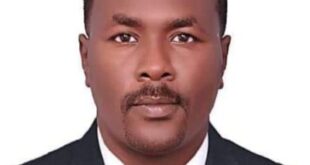
Mohammed Abdallah
Journalist, Civil Activist and Human Rights Defender
mohammedabdalluh2000@gmail.com
Introduction:
Since Sudan’s independence in 1956, and up to the present day, civil society has played a pivotal role in shaping political and social transformations. From professional unions and graduate associations, through women’s movements, to contemporary youth initiatives, civil society has formed a political and social force that contributed to resisting authoritarianism, promoting democratic values, and protecting rights and freedoms.
The Sudanese civil society experience is characterized by deep historical roots dating back to the era of resistance against colonialism, and it possesses renewed vitality in facing the challenges following the December 2018 revolution, the military coup in 2021, and the devastating war that erupted in April 2023.
First: The Concept of Civil Society and its Sudanese Framework
Despite the multiplicity of definitions, civil society in Sudan can be viewed as a collection of voluntary organizations independent of the state and political parties, organized by the free will of their members. These organizations adhere to the values of tolerance, respect for diversity, and peaceful action to achieve societal interests. This framework in the Sudanese context includes:
Trade unions and professional associations, Including political parties.
Civil society organizations, particularly human rights, development, and other organizations.
Women’s and youth movements.
Popular initiatives (such as resistance committees, emergency rooms, and others).
All social associations, including cultural, cooperative, and other organizations.
However, the confusion between the concept of ‘civil’ and ‘political’, and the ambiguity of the concept in the minds of some elites, has led to continuous discussions about the boundaries of civil society’s roles and its relationship with partisan work.
Second: Historical Roots
Sudanese civil society emerged in the context of resistance to colonialism. The 1940s and 1950s witnessed the rise of graduate organizations, labor unions, and farmers’ movements. This period also saw significant student and women’s activism, represented by the establishment of the Sudanese Women’s Union (1952) and the Students’ Union (1940).
After independence, the role of professional unions and syndicates expanded, and sports and cultural movements grew as an integral part of the civil fabric. The emergence of many civil society organizations was linked to parallel liberation or ideological political movements.
Third: The December 2018 Revolution and Civil Society
Civil society played a pivotal role in overthrowing the Al-Bashir regime through:
The Forces of Freedom and Change alliance, which brought together political, trade union, and civil forces.
The Sudanese Professionals Association, which became an icon of the revolutionary movement.
Extensive contributions from resistance committees and youth initiatives.
However, participation in the transitional authority revealed internal disagreements about the limits of the political role and led to divisions, especially with the absence of a unified vision for the nature of the relationship between civil society and the authority.
Fourth: The April 15, 2023 War and its Impact on Civil Society
he outbreak of war between the army and the Rapid Support Forces constituted a critical moment, not only for civil society but for all Sudanese people. Among the catastrophic consequences of this war on civil society are:
Repression and Restriction: Closure of civil spaces and targeting of activists.
Shift to Humanitarian Work: Many initiatives, especially grassroots groups, transitioned to relief roles.
Displacement and Diaspora: Relocation of civil activity to neighboring countries and the establishment of civil networks in exile.
Militarization of the Public Sphere: Decline of the oversight role and difficulty of internal political pressure.
Fifth: Youth Organizations and Grassroots Groups
Youth were the spirit of the revolution and remain the focus of civil activity:
Resistance Committees: Horizontal organizational frameworks that led the field movement.
Services and Change Committees: Partnership with local authorities to improve services.
Emergency Rooms: Local relief initiatives to confront war and famine.
Collective Kitchens and Health Centers: Humanitarian efforts led by volunteer groups.
These characteristics, such as horizontal organization, adoption of participatory democratic mechanisms, and absence of hierarchy, open the door wide for these groups to transform into a broad social movement with a civil-political dimension in the future.
Sixth: Structural Challenges
Despite its vitality, Sudanese civil society, including its youth component, faces chronic crises, including:
Weak Self-Awareness: Excessive reliance on imported models and terminology, and disregard for historical national roots.
Contradiction between Discourse and Practice: Weak internal democracy, monopolization of leadership, and lack of transparency.
Funding Problem: Reliance on foreign funding.
Ambiguity about the Political Role: Confusion between ‘non-partisan’ and ‘non-political’, which limits the possibilities of influence.
Militarization of the Public Space: Security restrictions and political violence against activists.
Seventh: Future Prospects
Despite the war and division, there are still real opportunities to build a stronger civil society:
Organizational Reconstruction: Strengthening internal democratic structures.
Rooting the Concept: Connecting the present with the historical national roots of the civil movement.
Building Broader Alliances: Between youth groups, women’s organizations, and professional unions.
Cross-Border Work: Investing in the presence of activists in the diaspora to build support networks and international influence.
Balancing Relief and Political Pressure: To ensure that humanitarian work is not used as an alternative to demanding peace and justice.
Conclusion:
Sudanese civil society, especially its youth organizations, stands today before a historical test. While the war has imposed unprecedented challenges, grassroots and youth groups have shown an exceptional ability to adapt and innovate. Investing in this dynamism, and addressing the crises of identity, structure, and funding, can make civil society a fundamental pillar for rebuilding Sudan on democratic, just, and inclusive foundations.
Note:
This section is dedicated to answering the fundamental questions for this event held on the occasion of International Youth Day, which revolve around the role and capacity of youth to influence, and the potential of youth in formulating a comprehensive national project that transcends geographical and political divisions.
Youth and a Unified National Agenda Amidst Geographical and Political Fragmentation
Question 1: Can a unified national agenda for youth be formulated? And what prevents independent youth from playing a moral and political leadership role in stopping the war?
Despite the deep political and geographical divisions, the suffering of Sudanese youth is similar, manifested in marginalization, unemployment, loss of security, and blocked horizons. These commonalities represent a solid foundation for formulating a unified national agenda based on the values of peace, social justice, and democratic transformation.
However, there are obstacles that limit youth from playing a political and moral leadership role, including:
Psychological and social exhaustion resulting from continuous war and displacement.
Absence of safe spaces for dialogue and organization.
Security crackdowns and targeting of youth leaders by conflict parties.
Fragmentation of youth initiatives and weak coordination among them, especially between regions and other areas.
Nevertheless, experiences such as the ‘Resistance Committees’ and ‘Emergency Rooms’ have proven the ability of youth for horizontal organization and field work, which makes moral leadership possible if support and recognition for their national project are provided.
Specificity of Civil Society’s Agenda Compared to Conflict Parties
Question 2: What makes civil society’s agenda different from conflict parties? And does it possess sufficient pressure tools to stop the exploitation of youth?
Civil society fundamentally differs from conflict parties because it is:
Unarmed and relies on peaceful means and dialogue.
Places civilians at the center of its concerns, not control over power or land.
Adopts values of transparency and accountability instead of the logic of dominance.
However, its ability to exert pressure is relatively limited for reasons including:
Weak coordination among its components, especially grassroots and leadership.
Excessive reliance on external funding, which may sometimes face many total or partial complications.
Lack of direct influence over armed parties.
Nevertheless, civil society can exert influence through several means, including:
Mobilizing local and international public opinion.
Exposing human rights violations, especially those directed against youth.
Creating regional and international alliances to support stopping the exploitation of youth in war.
Building Cross-Affiliation Youth Alliances
Question 3: How do independents build cross-regional and cross-affiliation alliances to stop the war? And what are the obstacles facing this path?
The building process can start from:
Digital communication networks that allow overcoming spatial barriers.
Joint work on humanitarian issues such as relief, education, and health, among others, to create bonds of trust between different components.
Formulating a unified youth charter that focuses on common issues and avoids contentious issues initially.
Key Obstacles:
Inciting discourse and directed media that deepen mutual suspicions.
Disparities in resources and opportunities between regions of Sudan.
Fear of political or security infiltration of independent initiatives.
However, the solution may lie in protecting the independence of alliances and building transparent decision-making mechanisms.
Integrating the Youth Agenda into a Cross-Divisional National Project
Question 4: How can the youth agenda be integrated into a national project, despite the divisions? And is it stronger than the divisions or hostage to them?
The process of integrating the youth agenda requires mechanisms and the following:
Including youth representatives in all national dialogue platforms.
Aligning the youth agenda with peace and development priorities to ensure broader acceptance.
Launching national awareness campaigns that highlight youth issues as national issues.
In this context, UN Security Council Resolution 2250 – September 2015, which represents the first official recognition by the United Nations of the pivotal role of youth in peace and security, can be invoked. In the Sudanese context, which is witnessing armed conflict and a sharp decline in civil spaces, the importance of this resolution as a reference framework through which youth civil participation can be enhanced stands out.
The youth agenda carries an inherent strength greater than divisions, because it stems from comprehensive suffering that does not differentiate between one region and another. However, this strength is threatened if it is left hostage to political polarization or regional division.
Towards a Renewed Civil Society
Despite the structural challenges faced by Sudanese civil society, including conceptual ambiguity, duality of discourse and practice, weak democratic structuring, and reliance on external funding, the vitality of youth groups, experiences of civil resistance, and the legacy of volunteer work offer a historical opportunity to rebuild a national project led by youth, and restore civil society’s role as a political and moral force in confronting the war.
If youth can overcome psychological and organizational obstacles, formulate a unifying agenda, and build cross-affiliation alliances, Sudanese civil society can transform from a victim of war into a key actor in stopping it.
Mohammed Abdallah
Journalist, Civil Activist and Human Rights Defender
12/08/2025
