


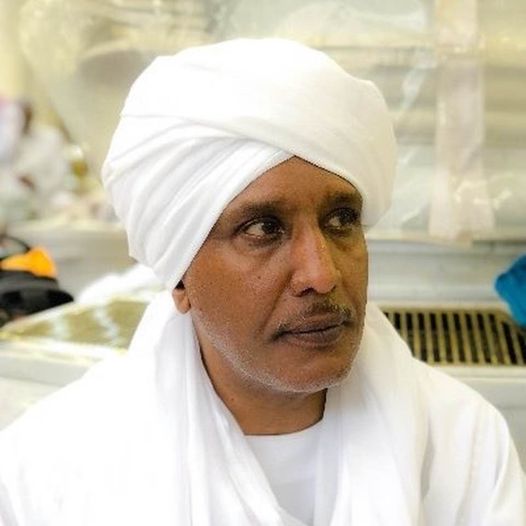
Dr. Walid Adam Madbo.
When the United States moves the Sudan from the guise of civil war and political mediation to the National Security and Counter-Terrorism Service, while pursuing the Sudan ' s brothers within its new strategy of 2026, this reflects a late realization of the seriousness of the interlinkages between the Sudanese war, the security of the Red Sea, the Horn of Africa and the escalating Iranian influence, but remains incomplete if the police dimension does not go beyond understanding the historical structure that has already produced these phenomena.
The problem of the Sudan has never been in the Muslims alone, not in the sectarian community alone, not even in the militarization as an institution independent of society, but in a whole class that has embraced the wearing of masks and replaced them as the moment may be. This is how Galabi was born, not as a pure ethnic identity, but as a political mind based on monopoly of power and reproduction of dominance through symbols, slogans and ideologies.
Thus, it is difficult to understand Sudanese Islamism as merely a religious aggressor or a member of a closed ideology; in many of its manifestations, political Islam in the Sudan was only the latest masks used by the old dominance to recycle itself. Thus, the fundamental difference between Islamophobia, circumstantialism and certain nationalists and leftists of the same status is hardly apparent; the difference was often in the language used, not in their deep view of the State, the margin and power. All treat the countryside as a space for mobilization, subjugation or forced redrafting, not as an equal partner in the country.
This war has come to the end of the masks, as it has been found that a large sector of the North elite has not seen an inclusive national institution in the army, but a tool to protect the old centre even through the destruction of the parties themselves. That's why bombing villages, markets and hospitals is morally possible within this elite speech, because the state — In her deep consciousness. — It wasn't everyone's home, it was a historical privilege guard, threatened with collapse.
It was therefore not surprising that the embassies should be replaced, and that the margins should be removed from the political obedience house in search of broader alliances, recognizing that the old breastfeeding equivalence was no longer viable, and that the departure from the historical humiliation circle could not take place within the stereotypes formulated by the Centre alone or through the illustrative symbols promoted in the past decades.
The impasse of the central elite lies not only in an identity crisis, but in its constant attempt to compensate for a structural lack of traditional dominance through intensive investment in symbols and speeches. The group that does not have sufficient demographic weight, widespread economic expansion, and the actual monopoly of violence, has only the monopoly of the definition of the Sudan itself: who is the real Sudanese?
From this point of view, the issue was not merely a natural celebration of intellectuals or politicians, but rather a symbolic doom around certain personalities until it appeared that the Sudan had produced thought, literature and politics only through a narrow circle of people in the centre, and criticism was transformed into a kind of cultural blasphemy, not because these symbols were truly over-accounted, but because the status itself was suspended, and the question that was long overdue was:
The Centre has been more good in the symbol industry than in the same renaissance industry; it has monopolized the definition of national culture, national leader and Sudanese genius, while dozens of voices coming from the countryside and the parties have been marginalized, not because of their weak contribution, but because they have not belonged to the network of closed recognition that manages culture and politics together.
The manufacture of satellites was not limited to sectarian, Islamic or military institutions, but extended even to so-called Sudanese civil society; that space had long been introduced as the progressive and moral alternative of the former State, while only a significant part of it was a closed city paralysis, monopolizing the modern language in the same way as the ancient national and religious language.
The elite, which spoke in the name of democracy and human rights, has often been treated with the countryside as a subject of pity, study or financing, not as equal partners in the production of meaning and policy. It has been more polite than the Muslims, but it has not always been more liberal than in the deep view of the archipelagic language, so the Sunni and Al-Hathia have often kept the same religious status as the same.
وفي المقابل، جرى دفن عشرات المبدعين الحقيقيين أو الناشطين الحقوقيين القادمين من الريف السوداني خارج الضوء، لا بسبب ضعف إسهامهم، بل لأنهم لا ينتمون إلى شبكة الاعتراف المركزية. ولهذا فإن اختزال الأزمة السودانية في “الإخوان المسلمين” وحدهم يُشبه معالجة الحمى مع تجاهل المرض. فالإسلاميون لم يخلقوا بنية الهيمنة من العدم؛ لقد ورثوها، ثم كشفوها بفظاظة وعجّلوا بانفجارها.
كانوا أقل براعة من الجيل القديم في إدارة القناع، وأكثر استعجالًا للثروة والسلطة، ففضحوا الآلية كلها دفعة واحدة. ولذلك فإن تفكيك التنظيمات الإسلاموية — مهما كان ضروريًا أمنيًا — لن يؤدي وحده إلى بناء سودان جديد، ما لم يُطرح السؤال الأعمق: كيف نشأت الدولة السودانية أصلًا؟ ومن احتكر تعريفها وتوجيهها منذ الاستقلال؟
ختامًا، لقد بدأت الأجيال الجديدة تدرك، ربما متأخرة، أن التحرر لا يبدأ بالبندقية وحدها، بل بتحرير الوعي من قداسة المركز. فكل نظام هيمنة يحتاج، قبل الجيش والمال، إلى أسطورة ثقافية وأخلاقية تحميه من المساءلة. ولهذا يصبح هدم الأصنام الرمزية جزءًا من مشروع التحرر نفسه، لا مجرد معركة ثقافية هامشية. فالنهضة الحقيقية في السودان لن تأتي عبر استجداء الاعتراف من مركز مأزوم، ولا عبر الاكتفاء بالمقاربات الأمنية الدولية، بل عبر إعادة توزيع المعنى والسلطة معًا؛ بناء فضاءات ثقافية وسياسية مستقلة تعبّر عن أقاليم البلاد وتنوعها الحقيقي، لا عن سردية جماعة احتكرت الوطن طويلًا ثم ظنت أنها الوطن ذاته.
September 9, 2026
auwaab@gmail.com