 سودانايل أول صحيفة سودانية رقمية تصدر من الخرطوم
أخبار أخرى
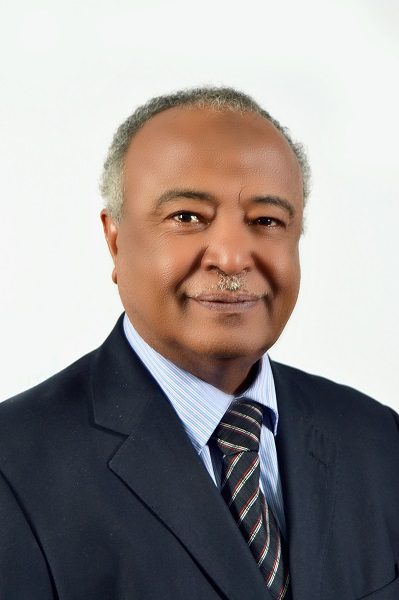
Professor Mekki El Shibly
Executive Director, Cognisance Centre for Strategic Studies
Executive Summary
Sudan’s ongoing conflict has produced mass displacement, hunger, and widespread violence. The Quartet, comprising the United States, Egypt, Saudi Arabia, and the United Arab Emirates, has proposed a roadmap toward peace: (i) a humanitarian truce, (ii) a ceasefire, and (iii) a transition to civilian governance.
While the roadmap represents a necessary sequencing of steps, it raises a critical question: how can Sudan’s generals be persuaded to withdraw from politics when they fear prosecution, loss of power, and retribution? Sudanese civilians, meanwhile, demand justice for atrocities and reject another cycle of impunity.
Reconciling these imperatives, credible guarantees for military actors and meaningful justice for victims, is central to Sudan’s prospects for peace. This report analyses comparative experiences and proposes a hybrid path to peace and accountability as the only viable option to avoid disintegration.
1. The Core Dilemma
Military concerns: No leader is likely to step aside voluntarily without credible guarantees for personal and institutional security.
Civilian demands: Survivors and civil forces demand justice and accountability, with widespread resistance to repeating past impunity deals.
Strategic challenge: Designing a framework that balances these imperatives without derailing peace efforts.2. Lessons from Comparative Experiences
Africa and beyond provide relevant, though imperfect, precedents:
Rwanda (1994): Justice through tribunals and Gacaca courts, but no guarantees for the old regime. Political exclusion entrenched grievances.
Liberia (2003): Exile for Charles Taylor and guarantees for warlords secured peace. Justice was delayed, with partial accountability through a Truth and Reconciliation Commission.
Mozambique (1992): Amnesty for RENAMO rebels and integration into the army stabilised peace, but violence later resurfaced.
Algeria (late 1990s): Broad amnesty ended conflict but silenced victims and entrenched authoritarian rule.
Ethiopia (2022): The Tigray peace deal allowed reintegration but postponed justice, leaving fragile trust.
South Africa (1994): Truth and Reconciliation Commission balanced amnesty with disclosure, providing a middle path.
Colombia (2016): FARC rebels received reduced penalties linked to confessions and political participation, combining justice and reintegration.
South Sudan (2015 & 2018): Sweeping guarantees for armed elites without justice or reform led to cycles of renewed conflict.
3. Policy Options for Sudan
3.1 Selective Accountability
Prosecute top commanders with clear responsibility for atrocities.
Offer exile, reduced penalties, or reintegration to mid- and lower-level actors.
Balance deterrence with incentives for withdrawal from politics.
3.2 Restorative Mechanisms
Establish a truth and reconciliation process rooted in Sudanese traditions.
Provide victim acknowledgement, reparations, and memorialisation.
Focus on rebuilding social trust and national cohesion.
3.3 Security Guarantees
Conditional amnesty, monitored exile arrangements, or integration into reformed structures.
Guarantees must be overseen by a civilian-led transitional authority, not the military itself.
4. Avoiding the South Sudan Trap
The gravest risk is repeating South Sudan’s experience: offering endless guarantees to armed elites without accountability or reform, resulting in fragile truces followed by renewed violence. Sudan must pursue a balanced, hybrid approach, credible guarantees that remove generals from power, alongside accountability mechanisms that prevent impunity.
5. Implementation Guarantees
For a Hybrid Path to Peace and Accountability to succeed:
The Quartet should provide political leverage and incentives for military withdrawal.
The United Nations should offer legitimacy, technical support, and monitoring (including peacekeeping if needed).
The African Union (AU) and IGAD must ensure African ownership, act as guarantors, and align Sudanese civilian forces under a unified umbrella.
Together, these actors can form a multilayered guarantee system that combines leverage, legitimacy, and regional consensus.
6. Civilian Unity as a Precondition
The Quartet roadmap creates an opening, but success depends on civilian unity. Fragmented civilian actors only strengthen the generals’ hand. Civilian forces, especially the Forces of Freedom and Change (FFC) and allied groups, must:
Consolidate around broad common denominators.
Present a unified plan for hybrid justice and reconciliation.
Engage international and regional guarantors through a single, representative umbrella mechanism.
7. Conclusion
Sudan faces a stark choice:
Guarantees without justice risk entrenching impunity.
Justice without guarantees risks prolonging the war.
The only viable way forward is a hybrid path: a Sudanese-led formula that provides credible guarantees to enable generals’ withdrawal from politics, while delivering enough accountability to reassure victims and prevent future impunity.
All Sudanese carry deep wounds from killings, looting, and displacement. Any talk of guarantees feels like an affront to victims’ suffering. Yet Sudan now stands at the edge of fragmentation. A perfect peace is unattainable; compromise is necessary. The hybrid path, though unsatisfactory to all sides, is the only viable option to preserve Sudan’s unity and prevent collapse.
melshibly@hotmail.com
